
Flatbed, Tanker & Specialized Trucking Reviews
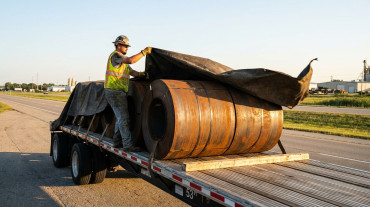
Specialized trucking is where the pay scales seriously upward and the wash-out rates climb with it. Drivers come to cdlscan.com asking the same question: is flatbed, tanker, or heavy-haul actually worth the extra pay? The honest answer depends on physical tolerance, endorsement willingness, and how you read the reviews of each segment.
Flatbed trucking pays a premium — typically $0.05–$0.10 per mile more than dry van, sometimes more for specialized flatbed loads like coil, oversize, or building materials. The trade is physical: tarping in February rain, securement in 95-degree summer heat, climbing on loads 24 times a day. Reviews of Maverick, TMC, and Melton consistently mention the physical toll alongside the higher pay. The carriers that win this segment do so by paying tarp pay separately, providing quality straps and tarps, and supporting injuries with paid recovery time.
Tanker trucking is its own world. The endorsement is straightforward, but the operational complexity is not. Liquid loads behave differently than dry — surge dynamics affect braking, cornering, and acceleration. Food-grade tanker work is generally cleaner and pays well; chemical tanker work pays more and demands more rigorous compliance. Groendyke Transport, Quality Distribution, and Heartland's tanker division dominate reviews in this segment.
Reefer (refrigerated) trucking is the workhorse of the produce, dairy, and pharmaceutical supply chain. Reefer freight tends to be tighter in delivery windows and stricter on temperature compliance. Pay is similar to dry van or slightly higher; the operational complexity of monitoring reefer units around the clock is the trade-off. Stevens, Prime's reefer fleet, and CR England all have substantial reefer operations with mixed-but-trending-positive reviews.
Heavy-haul and oversize work is the highest-paying segment for company drivers and the highest-grossing for owner-operators. Permits, escorts, route planning, and bridge surveys are part of the job. Mercer Transportation and Anderson Trucking Service (ATS) lead this segment in driver reviews. The pay premium is real — owner-operators in heavy-haul can clear $150,000+ net in a strong year — but the entry barrier is substantial.
Hazmat trucking adds the hazmat endorsement, TSA threat assessment, and significant liability exposure. Hazmat drivers often haul fuel, chemicals, or explosives. The pay premium is consistent — usually $0.05+ per mile — and the carriers that specialize in hazmat tend to run tighter operations because the regulatory exposure forces it.
Auto transport (car hauler) work overlaps with the automotive transport segment described later in this pack. Pay can be excellent — top car haulers gross more per mile than nearly any other segment — but the loading and unloading skill curve is steep. Reviews consistently describe the first six months as brutal until the muscle memory for loading nine cars on a stinger develops.
Specialized container, intermodal, and drayage work falls outside long-haul OTR but provides reliable home-daily or home-weekly schedules near port cities. Pay is hourly or per-load. Reviews favor carriers that pay per pull rather than per hour because turn times can be genuinely awful at congested ports.
How do I read reviews in specialized segments? Three rules I apply consistently. First: weight equipment reviews heavily — specialized work demands specialized equipment, and carriers that scrimp on tarps, straps, hoses, or refrigeration units show up loud in reviews. Second: weight training reviews heavily — a flatbed driver who never learned proper coil chocking or a tanker driver who never internalized surge will eventually have an incident, and carriers that under-train show their hand in early-career reviews. Third: read endorsement-specific complaints carefully — a tanker review complaining about wash-out delays at the carrier level is different from a complaint about a single customer.
Pay in specialized work in 2026 looks like this for company drivers: dry van $0.58–$0.72; reefer $0.60–$0.74; flatbed $0.62–$0.78; tanker $0.64–$0.80; hazmat tanker $0.68–$0.85; heavy-haul $0.72–$0.95+. Owner-operator gross rates run roughly 2.5x to 3x company rates, with net depending on truck and trailer cost structure.
The decision framework I give drivers is simple. Pick the segment whose physical demands you can sustain for at least three years. Pick a carrier in that segment whose reviews match what you actually want — pay, home time, equipment, training. Verify with FMCSA SMS data and one current driver. Then commit. Specialized segments reward consistency; carriers prefer drivers who stay in segment because the training investment is real.
FAQ
1. What is flatbed trucking? Hauling freight on an open trailer secured with straps, chains, and tarps — common for steel, lumber, machinery, and building materials.
2. What is tanker trucking? Hauling liquid or gas products in a tank trailer — food-grade, chemical, or fuel.
3. What is reefer trucking? Refrigerated trailer work for produce, dairy, frozen goods, and pharmaceuticals.
4. What is heavy-haul trucking? Oversize and overweight loads requiring permits, often escorts, and specialized trailers like RGNs.
5. Which specialized trucking pays the most? Heavy-haul typically pays the highest, followed by hazmat tanker, then flatbed and chemical tanker.
6. Which specialized trucking is hardest physically? Flatbed is generally most physical, followed by car hauler. Tanker and reefer are less physical but more cognitively demanding.
7. What is the best flatbed company? Maverick, TMC, and Melton consistently lead flatbed reviews.
8. What is the best tanker company? Groendyke, Quality Distribution, and Heartland tanker division rank highest.
9. What is the best heavy-haul company? Mercer Transportation and Anderson Trucking Service lead heavy-haul reviews.
10. What endorsements do I need for tanker? Tanker (N) endorsement, plus Hazmat (H) for hazardous liquid loads. Combined Tanker/Hazmat is X.
11. What endorsements do I need for flatbed? No specific endorsement, but quality carriers require successful completion of in-house securement training.
12. How long is flatbed training? Typically two to four weeks at major flatbed carriers, plus on-the-road training.
13. How long is tanker training? Two to four weeks at major tanker carriers, with extra time for hazmat-specific tanker work.
14. Is flatbed dangerous? Higher injury rate than dry van, primarily from falls, strap-related injuries, and tarping in bad weather.
15. Is tanker dangerous? Higher consequence potential due to load behavior and cargo type, but injury rates are similar to van work.
16. What is surge in tanker driving? Liquid movement in a partially full tank affecting handling, especially during braking and cornering.
17. How much do flatbed drivers make? Company solo flatbed: $70,000–$95,000 typical in 2026. Owner-operators: $200,000–$280,000 gross.
18. How much do tanker drivers make? Company solo tanker: $72,000–$100,000 typical. Hazmat tanker premium adds $5,000–$10,000 annually.
19. How much do heavy-haul drivers make? Company heavy-haul: $85,000–$120,000. Owner-operators: $250,000–$400,000 gross with substantial cost.
20. Is tarping really required every load in flatbed? No. Some loads tarp, some do not. Steel coil typically does not; lumber and building materials typically do.
21. What is a coil chock? A wood block specifically shaped to secure steel coil on a flatbed trailer.
22. What is a stinger trailer? A car hauler trailer with a low-profile front section allowing additional vehicle capacity.
23. What is an RGN trailer? Removable Gooseneck — a heavy-haul trailer where the gooseneck detaches for low-bed loading.
24. Is reefer harder than dry van? Slightly. Tighter delivery windows, temperature monitoring, and more demanding customers.
25. What is the best reefer company? Stevens, Prime reefer, and CR England rank highest in 2026 reefer reviews.
26. Are car haulers really specialized? Yes — different trailer, different loading skills, different risk profile.
27. What is the best car hauler company? Cassens Transport, United Road, and Jack Cooper rank highest in car hauler reviews.
28. What is intermodal trucking? Hauling shipping containers between rail terminals, ports, and customer facilities.
29. What is drayage? Short-haul container work, typically port-related, often local in nature.
30. How do I get into specialized trucking? Most carriers require one to two years of driving experience before training into specialized segments.
31. Is hazmat worth getting? Yes for the pay premium and route variety. The TSA threat assessment is the main entry hurdle.
32. What is the TSA threat assessment? A federal background check required for hazmat endorsement, costing roughly $90 and taking 30–60 days.
33. Can I haul hazmat in a CMV with a felony? Some felonies disqualify; the TSA threat assessment determines eligibility on a case-by-case basis.
34. What is the difference between food-grade and chemical tanker? Food-grade hauls edible products with strict cleanliness requirements; chemical hauls industrial products with hazmat overlap.
35. Which specialized segment has the best home time? Tanker and reefer dedicated routes often offer the best home time among specialized segments.
