
Truck Driver Pay: Per-Mile vs Percentage vs Hourly
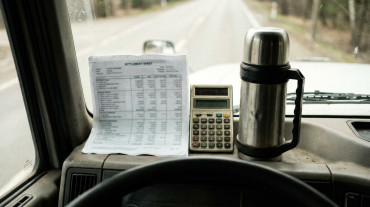
Pay reviews drive every other review. When drivers complain about home time, equipment, or dispatch on cdlscan.com, they almost always tie it back to money — miles cut, detention unpaid, surprise deductions on the settlement sheet. Understanding pay structure is therefore the single highest-leverage skill any CDL driver can develop, and most drivers do not have it.
There are five core pay structures in trucking: per-mile, percentage, hourly, salary, and per-load. Each has subvariants. Each is gameable. Each looks different in reviews.
Per-mile pay is the dominant structure for OTR and most regional company drivers. The headline rate is what every recruiter quotes. The reality is what shows up on the settlement after dispatch decisions, paid-but-rare bonuses, and deductions are applied. A driver paid $0.65 per mile who runs 2,500 miles per week grosses $1,625, but the same driver running the same lane could earn $1,400 or $1,800 depending on dispatch quality, breakdown response, and how detention is calculated.
The five questions I tell every driver to ask before signing a per-mile offer: average paid miles in the first 90 days, how detention is paid (after how many hours, at what rate), whether deadhead is paid the same as loaded, what counts toward the 2,500-mile guarantee if one exists, and whether starter trucks have lower top speeds that reduce achievable miles. Reviews answer these questions far more honestly than recruiter calls.
Percentage pay is the standard for owner-operators leased to a carrier and some company-driver positions in specialized segments. The driver receives a percentage of what the load pays — 65 percent to 75 percent for most lease O/Os, lower for company drivers in percentage models. The advantage is that high-paying loads pay you more; the risk is that low-paying loads pay you less. Landstar's percentage model is the gold standard — drivers consistently report the most transparent settlements in the industry.
Hourly pay dominates local and LTL operations. Pay rates of $24–$34 per hour are typical for line-haul and P&D in 2026, with overtime after 40 hours. Hourly pay is the most predictable, and it is also where reviews show the cleanest correlation between pay and satisfaction — when you know exactly what you will earn, fewer disputes arise.
Salary pay is rare but exists, mostly at major LTL carriers and dedicated accounts. Salary is the most predictable of all but typically caps the upside — drivers willing to grind miles often outearn salary peers in per-mile structures.
Per-load pay is common in container drayage, expedited, and some specialized work. Pay is fixed per delivery regardless of distance or duration. Per-load is great when turn times are fast and brutal when they are slow; reviews of drayage carriers tend to live or die on this metric.
Beyond the base structure, modern compensation packages include layered bonuses and accessorial pay. Safety bonuses ($0.01–$0.04 per mile), fuel bonuses ($0.01–$0.03), tarp pay ($25–$50 per tarped load), stop pay ($15–$50 per stop after the first), detention pay ($15–$25 per hour after a free period), layover pay ($75–$150 per night), and breakdown pay ($75–$200 per day) all add up. Reviews are the only honest place to learn how reliably each of these is paid.
Deductions matter as much as additions. Common deductions: occupational accident insurance ($25–$60 weekly), trailer rent for O/Os ($150–$300 weekly), fuel card fees, IRP and IFTA at varying rates, tolls (sometimes deducted from settlement). The ratio between gross and net is the most useful number a driver can know about a carrier, and it is the one number recruiters never volunteer.
How do I teach drivers to compare pay packages? Build a simulated week. Take the carrier's typical mileage range from reviews, apply the per-mile rate, add a realistic mix of bonuses and accessorials, subtract every deduction. Do this for three carriers. The results often surprise drivers — the carrier with the lower headline rate frequently wins the take-home calculation because of dispatch reliability and detention pay.
For owner-operators the math is harder but more important. Calculate revenue per mile, then subtract fuel, maintenance, insurance, truck payment, depreciation, and overhead. Net revenue per mile under $0.80 is a yellow flag; under $0.60 is a red flag in 2026. Reviews from current O/Os at the carrier are the best signal here.
The bottom line: every pay structure has reviews that tell you whether the structure is honored. Read for specificity, build the simulated week, and treat the headline rate as a starting point rather than a destination. That is how you turn pay shopping from a recruiter pitch into a real comparison.
FAQ
1. What is per-mile pay? Compensation based on miles driven, the most common structure for OTR and regional company drivers.
2. What is percentage pay in trucking? A percentage of the load's revenue paid to the driver — common for lease owner-operators.
3. What is hourly pay in trucking? Compensation for time on duty, common in local LTL and many city operations.
4. What is the average per-mile pay for company drivers? $0.58–$0.78 per mile for solo OTR in 2026; flatbed and tanker pay 5–10 cents more on average.
5. What is the average percentage rate for owner-operators? 65–75 percent of load revenue for lease O/Os, depending on the carrier.
6. What is detention pay? Compensation for time spent at customer dock beyond a free period, typically $15–$25 per hour after two free hours.
7. What is layover pay? Compensation when a driver is delayed overnight without a load, typically $75–$150 per night.
8. What is stop pay? Compensation for additional stops on multi-stop loads, typically $15–$50 per stop after the first.
9. What is tarp pay? Compensation for flatbed loads requiring tarping, typically $25–$50 per tarped load.
10. What is breakdown pay? Compensation when a truck is out of service for repair, typically $75–$200 per day.
11. What is a safety bonus? Per-mile bonus paid for inspections, accidents, and HOS compliance — typically $0.01–$0.04 per mile.
12. What is a fuel bonus? Per-mile bonus paid for hitting fuel-efficiency targets, typically $0.01–$0.03 per mile.
13. What is paid orientation? Compensation during the carrier's onboarding period, typically $400–$1,000 for the orientation week.
14. What deductions show up on a settlement sheet? Occupational accident insurance, trailer rent for O/Os, fuel cards, IRP/IFTA, advance recovery, tolls if applicable.
15. What is occupational accident insurance? Coverage for work-related injuries for owner-operators outside workers' comp; typically $25–$60 weekly.
16. What is escrow in O/O settlements? Money held back by the carrier for damages, typically $1,000–$2,500 returned at lease termination.
17. What is trailer rent? Lease O/O fee for using carrier-provided trailers, typically $150–$300 weekly.
18. How much does fuel cost an owner-operator? $20,000–$50,000+ annually depending on miles, MPG, and fuel surcharges.
19. How much does a truck cost an owner-operator? New tractors run $160,000–$250,000+; used trucks $40,000–$120,000+.
20. How much does insurance cost an owner-operator? $8,000–$15,000 annually for liability and physical damage on a typical OTR truck.
21. What is the difference between gross and net for owner-operators? Gross is total revenue; net is what remains after fuel, maintenance, insurance, payment, and overhead.
22. What is a fuel surcharge? A per-mile passthrough adjusted to fuel prices, typically $0.30–$0.50+ per mile in 2026.
23. How is detention triggered? Most carriers start the clock after two hours at the customer dock, requiring documentation through the qualcomm or app.
24. Is sleeper berth pay separate? Some carriers pay a small premium for extended sleeper berth time on relays.
25. How is paid time off handled? Most major carriers offer one to four weeks PTO after one year of service, with variable accrual.
26. What is a 401(k) match? Carrier contribution to retirement savings, typically 25–100 percent on the first 3–6 percent of pay.
27. How does pay differ between solo and team drivers? Team typically runs more weekly miles, splitting pay; per-mile rates are similar or slightly higher for team.
28. Can I negotiate per-mile rate? Sometimes, especially with experience, clean record, and specialized endorsements.
29. What is sign-on bonus? A one-time payment for joining a carrier, typically $1,500–$10,000+ paid in installments over the first six to twelve months.
30. Why are sign-on bonuses paid in installments? To reduce churn — drivers who quit early forfeit unpaid portions.
31. What is referral bonus? Payment for referring a new driver who is hired and stays through a milestone, typically $1,000–$5,000.
32. How do I track what I am actually earning? Save settlement sheets, build a personal spreadsheet, compare gross-to-net ratio quarterly.
33. Are bonuses really paid? Reviews are the best test. Carriers with strong review reputations generally pay bonuses reliably; carriers with poor reputations often layer bonuses to make the offer look better than it pays.
34. What is the highest-paying trucking job? Heavy-haul owner-operator and oversize specialized work top the income range, with $250,000+ achievable for top operators.
35. What is the lowest-paying trucking job? Entry-level OTR with a training carrier in the first year, typically $42,000–$55,000 while learning.
