
Car Shipping Driver Reviews: Top Companies and Pay
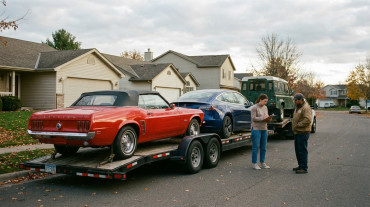
Car shipping is the consumer-facing side of the auto transport industry. While dedicated car haulers move new vehicles from plants to dealers, car shipping companies move customer vehicles — relocations, online auction wins, snowbird seasonal moves, military PCS transfers, and the occasional collector car. The segment has its own pay structures, its own carriers, and its own review landscape, which I track separately at cdlscan.com.
The car shipping ecosystem in 2026 has three layers. Brokers handle most consumer-facing demand — Montway Auto Transport, AmeriFreight, Sherpa Auto Transport, and dozens of smaller brokers compile customer orders and assign loads to carriers. Carriers do the actual hauling, ranging from large fleets like Reliable Carriers (for enclosed) to thousands of small operators with one-to-five trailers. Hot-shot operators represent the smallest end, often hauling one to three vehicles on smaller trailers.
Pay structure differs significantly from dedicated car hauling. Most car shipping work pays per-vehicle rather than per-mile, with rates set by load posting on platforms like Central Dispatch, Super Dispatch, and Run Buggy. Rates fluctuate with route demand, season, and vehicle type. Drivers comfortable with load-board work can earn well; drivers who need consistency may struggle.
The top car shipping employers I see in driver reviews fall into a few categories. For enclosed transport, Reliable Carriers and Intercity Lines lead — both pay well, operate quality equipment, and tend to handle higher-value vehicles. For open transport at scale, several regional carriers like Horseless Carriage and Andrews Logistics show strong reviews. For hot-shot operators, the picture is more fragmented because the segment is dominated by small businesses and owner-operators rather than large fleets.
The work itself differs from dedicated car hauling in important ways. Pickup and delivery happen at customer driveways, public lots, and storage yards rather than dealer or auction lots. Customer interaction is significant — many car shipping deliveries involve a private buyer or seller present. Damage protocols matter even more because consumer expectations differ from dealer expectations.
Reviews of car shipping carriers focus on three main themes: how reliably the carrier pays, how dispatch handles load board variability, and how the company supports drivers through customer disputes. Carriers that win these three points consistently outperform on review aggregate.
For drivers considering car shipping, the entry path differs from dedicated car hauling. Some operators come up through dedicated car hauling and transition to broker-driven work for the flexibility. Others start as owner-operators with a stinger trailer and build their business directly through Central Dispatch. The owner-operator path is more common in this segment than in nearly any other trucking segment.
Equipment in car shipping skews toward open trailers — three-to-eight car capacity is common — with a smaller premium segment using enclosed trailers for high-value loads. Hot-shot operators typically run goosenecks or smaller trailers carrying one to three vehicles. Reviews consistently distinguish carriers that maintain trailers well from those that defer maintenance, and the difference shows up in driver retention.
Insurance dynamics in car shipping deserve attention. Cargo coverage limits define what loads a carrier can take. Brokers screen carriers by insurance certificates and reviews; carriers with strong insurance and clean review profiles get the higher-paying loads first. This creates a flywheel effect where review quality directly affects revenue per mile.
Pay in 2026 for car shipping varies more than nearly any segment because of load-board structure. Solid open-transport company drivers earn $65,000–$95,000; enclosed transport drivers $80,000–$120,000; hot-shot owner-operators $85,000–$140,000+ gross with substantial cost. The high variance reflects how much rate negotiation and load selection affect outcomes.
For consumers shipping vehicles, reviews matter on the broker side as much as the carrier side. Brokers control the relationship and assign carriers, so a great carrier paired with a poor broker still produces a poor consumer experience. cdlscan.com tracks both broker reviews and carrier reviews because the segment's structure makes both relevant.
The bottom line: car shipping is a viable segment with genuine earning potential and a different operational profile than dedicated car hauling. Drivers who succeed in it tend to be experienced, business-minded, and comfortable with load-board variability. Drivers who want predictable per-mile pay and structured dispatch are usually better served elsewhere.
FAQ
1. What is car shipping? The transportation of customer vehicles (relocations, online purchases, seasonal moves) by carrier, typically arranged through a broker.
2. How is car shipping different from car hauling? Car shipping focuses on consumer-driven moves; car hauling typically refers to new-vehicle delivery from plants to dealers.
3. Who are the top car shipping companies hiring drivers? Reliable Carriers, Intercity Lines, Horseless Carriage, Andrews Logistics, and many regional and hot-shot operators.
4. How do car shipping drivers get loads? Most use Central Dispatch, Super Dispatch, or Run Buggy load boards; some have direct broker relationships.
5. What is Central Dispatch? A load board where car shipping brokers post loads and carriers bid or claim them.
6. How is car shipping pay structured? Mostly per-vehicle, rate set by load posting, varying by route, season, and vehicle type.
7. How much do car shipping drivers make? Open-transport company $65,000–$95,000; enclosed $80,000–$120,000; hot-shot O/Os $85,000–$140,000+ gross.
8. What is hot-shot car shipping? Single-vehicle or two-vehicle moves on smaller trailers, often by owner-operators.
9. What trailer is used for car shipping? Open three-to-eight car trailers, enclosed for high-value loads, and goosenecks or smaller trailers for hot-shot.
10. Do car shipping drivers need a CDL? Yes for any combination over 26,001 lbs. Some hot-shot one-vehicle setups can operate non-CDL but limit revenue.
11. What is enclosed car shipping? Transport in fully enclosed trailers protecting vehicles from weather and road debris; used for collector and luxury cars.
12. Is enclosed car shipping more profitable? Higher pay per load, but slower turn times and higher equipment cost. Net depends on operation.
13. What is the broker's role in car shipping? Brokers source customers, post loads, assign carriers, and manage the customer relationship.
14. Are car shipping brokers reliable? Quality varies. Top brokers (Montway, Sherpa, Reliable Carriers' broker arm) are generally reliable; smaller or newer brokers vary.
15. How do I become an owner-operator car shipper? Acquire stinger trailer or smaller setup, register MC authority, secure insurance, set up Central Dispatch, and build broker relationships.
16. What insurance do car shippers need? Liability ($750K–$1M+), cargo ($100K–$250K typical for open, higher for enclosed), and physical damage on equipment.
17. How much does car shipping insurance cost? $10,000–$20,000+ annually for an O/O depending on coverage and history.
18. Is car shipping seasonal? Yes — strongest in spring through summer, slowest in deep winter except for snowbird routes south.
19. What are snowbird routes? Seasonal vehicle moves between northern states and southern states (mainly Florida, Arizona) for retirees.
20. How long does a typical car shipping load take? Two to seven days depending on distance and number of vehicles.
21. What is door-to-door car shipping? Pickup and delivery directly at customer addresses, the dominant model in the segment.
22. What is terminal-to-terminal car shipping? Pickup and delivery at carrier-operated terminals, less common today.
23. How do car shippers handle damage? Through documented inspection at pickup and delivery, with claims filed against the carrier's cargo insurance.
24. What is the BOL in car shipping? The Bill of Lading documenting vehicle condition at pickup and delivery.
25. Who pays for car shipping damage? The carrier's cargo insurance; the broker manages the customer-side claim.
26. Can I track a car shipping load? Most modern carriers offer GPS tracking via their app or the broker's platform.
27. Is hot-shot car shipping viable in 2026? Yes for capable operators. The barrier to entry is lower than full stinger setups but the per-mile margin is tighter.
28. What is the best load board for car shipping? Central Dispatch is the largest; Super Dispatch and Run Buggy are increasingly popular.
29. How do I price a car shipping load? Use historical rates on Central Dispatch, factor in fuel and overhead, and avoid bidding loads below operational break-even.
30. What are the common car shipping routes? Northeast to Florida, Midwest to West Coast, Texas to East Coast, and many regional snowbird and auction lanes.
31. Are car shipping reviews on cdlscan.com separate from general trucking reviews? Yes — segment-specific aggregation makes the data more useful for comparison.
32. How do I research a car shipping company? Read 30+ reviews on cdlscan.com or equivalent, check FMCSA SMS, verify cargo insurance, and talk to a current driver if possible.
33. What is FMCSA authority? The MC number authorizing a carrier to haul interstate freight under FMCSA jurisdiction.
34. What is cargo insurance certificate? Documentation of cargo coverage limits, required by brokers before assigning loads.
35. How do I succeed long-term in car shipping? Run quality equipment, document everything, maintain insurance, build broker relationships, and reinvest in trailer maintenance.
