
How CSA Scores Shape Driver Careers
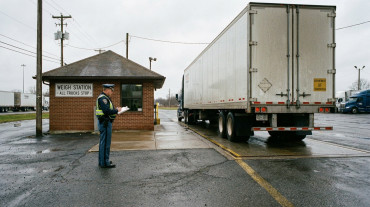
Most drivers I talk to at cdlscan.com think CSA scores are a carrier problem. They are wrong. CSA scores follow drivers as much as they follow companies, and the violation patterns recorded against you at roadside inspections shape every job application you submit for the next five years.
The Federal Motor Carrier Safety Administration (FMCSA) Compliance, Safety, Accountability program organizes carrier and driver violations into seven Behavior Analysis and Safety Improvement Categories — the BASICs. The five most relevant to drivers are Unsafe Driving, Hours-of-Service Compliance, Driver Fitness, Controlled Substances and Alcohol, and Vehicle Maintenance. Crash Indicator and Hazardous Materials Compliance round out the list.
Unsafe Driving is the BASIC where speeding, lane violations, distracted driving, and following-too-close violations land. These are the violations most likely to be tied to a driver rather than a carrier, and they are the most damaging on your PSP. A speeding 11–14 over violation in a CMV carries a five-point severity weight; speeding 15+ over carries a ten. Recruiters scanning PSPs flag five-point and higher violations as a matter of policy.
Hours-of-Service Compliance covers logbook and ELD violations. The shift to electronic logging devices in 2017–2019 dramatically reduced the volume of HOS violations, but the ones that remain are heavier — falsification carries a ten-point weight, and a single 11-hour driving rule violation is severity-7. The most common error I see is drivers being asked to log late-arrival sit time as off-duty when it should be on-duty not driving; the resulting HOS record looks clean to the carrier but reads strange to a recruiter.
Driver Fitness covers medical certification, CDL validity, and qualification documentation. Most violations here are administrative — expired medical card, missing documentation — but they roll into the driver's file the same way.
Controlled Substances and Alcohol covers DOT drug and alcohol violations. The Clearinghouse is now the primary record of these, but inspection-level findings still surface in PSP. A possession violation on a roadside inspection is one of the few short-record items that can permanently end a CDL career.
Vehicle Maintenance is mostly a carrier issue — broken lights, brake violations, tire problems, leaks. But drivers carry some of the responsibility because pre-trip and post-trip inspections are required, and a violation tied to a missed pre-trip item lands on the driver's record. Carriers with high Vehicle Maintenance BASIC tend to push drivers to roll on equipment they should not be driving, which is why I always tell drivers to read maintenance reviews carefully.
How do CSA scores affect drivers concretely? Three ways. First, they show up on PSP reports for five years of inspections and three years of crashes. Second, they shape carrier insurance posture, which affects whether a carrier will hire you at all. Third, they aggregate into your reputation when you cross carriers — a driver with three Unsafe Driving inspections in two years is treated as a higher risk regardless of their MVR.
The most important thing drivers can do is dispute violations they did not commit. The FMCSA DataQs system handles disputes and is genuinely effective when you have evidence — dashcam footage, witness statements, photos of the equipment in question. Disputes are resolved by the originating state agency, not FMCSA, which means quality varies by state. Texas, Pennsylvania, and Indiana tend to be reasonably responsive; some states are slower.
Pre-trip inspection discipline is the single highest-leverage behavior any driver can develop. Most Vehicle Maintenance violations a driver is held responsible for could have been caught with a careful pre-trip. Reviews of major carriers consistently distinguish those that give drivers time and tools for thorough pre-trips from those that pressure quick exits — this is one of the operational quality signals worth tracking.
For carriers, CSA scores are existential. A BASIC over the public threshold reduces freight broker willingness, raises insurance rates, and triggers FMCSA intervention. Reviews and CSA scores tend to correlate strongly — when I see a carrier with a high Vehicle Maintenance BASIC, I almost always see equipment-related complaints in the driver reviews from the same period.
The bottom line: CSA is not abstract. It is your driving career in numerical form, updated every time you cross a scale. Read your PSP at least annually, dispute errors, and prioritize carriers whose scores match the reviews their drivers leave.
FAQ
1. What is CSA in trucking?
Compliance, Safety, Accountability — FMCSA's program tracking carrier and driver safety performance through roadside inspections and crash data.
2. What is a BASIC in CSA?
A Behavior Analysis and Safety Improvement Category — seven categories grouping carrier and driver violations.
3. What are the seven CSA BASICs?
Unsafe Driving, HOS Compliance, Driver Fitness, Controlled Substances/Alcohol, Vehicle Maintenance, Hazmat Compliance, and Crash Indicator.
4. How long do CSA violations stay on a driver's record?
Five years for inspections and three for crashes on the PSP.
5. What is the PSP report?
Pre-Employment Screening Program — driver-level inspection and crash history pulled from FMCSA data.
6. How do I check my CSA score?
Drivers do not have a single CSA score; you check your PSP for the inspections and crashes that contribute to your carrier's score.
7. Can I dispute a CSA violation?
Yes, through the FMCSA DataQs system at dataqs.fmcsa.dot.gov.
8. What is a non-preventable accident?
A crash where the driver could not have reasonably avoided it. Even non-preventable crashes appear on the PSP.
9. Does a non-preventable crash count against my CSA?
It appears on PSP. Recently, FMCSA has improved how non-preventable determinations affect the score, but the inspection itself remains visible.
10. What is severity weight in CSA?
A point value 1–10 assigned to each violation reflecting its safety impact. Higher weight = more impact on the BASIC.
11. How heavy is a speeding violation in a CMV?
6–10 over: severity 4. 11–14 over: severity 5. 15+ over: severity 10.
12. How heavy is a logbook violation?
Most HOS violations are severity 1–7; falsification is 10.
13. What is a Driver Fitness violation?
Issues with CDL, medical certificate, or qualification paperwork.
14. What is a Vehicle Maintenance violation?
Equipment issues — lights, brakes, tires, leaks — discovered at inspection.
15. Are drivers responsible for Vehicle Maintenance violations?
Some yes, when tied to missed pre-trip findings. The carrier carries most of the BASIC weight.
16. What is a Hazmat violation?
Issues with placarding, shipping papers, or hazmat handling on a CMV carrying regulated materials.
17. What is a Crash Indicator?
A BASIC tracking crash frequency and severity. Heavily debated and undergoing methodology changes.
18. How do CSA scores affect carrier insurance?
High BASICs raise insurance rates significantly and can make some carriers uninsurable in conventional markets.
19. Do CSA scores affect freight broker decisions?
Yes. Many brokers refuse to tender freight to carriers with public BASICs over threshold.
20. How can I lower my CSA exposure as a driver?
Disciplined pre-trip, careful logging, defensive driving, and disputing inspection errors via DataQs.
21. What is a roadside inspection?
A DOT inspection of a CMV, ranging from Level III (driver only) to Level I (full driver and vehicle).
22. What is a Level I inspection?
The most thorough — full driver credentials and complete vehicle inspection.
23. What is a Level II inspection?
Driver credentials plus walk-around vehicle inspection without underside or wheel work.
24. What is a Level III inspection?
Driver-only — credentials, logs, medical card, no vehicle inspection.
25. What is a CVSA decal?
A 90-day inspection decal from the Commercial Vehicle Safety Alliance, given when a Level I or V passes clean.
26. How often should I review my PSP?
At least annually, and before any major job change.
27. How do I order my PSP report?
From psp.fmcsa.dot.gov for under ten dollars.
28. What is the FMCSA Clearinghouse?
A federal database of drug and alcohol violations and return-to-duty status.
29. How does the Clearinghouse affect my CDL?
A positive test or refusal puts you in prohibited status until you complete return-to-duty.
30. How do I know if I am in the Clearinghouse?
Set up an account at clearinghouse.fmcsa.dot.gov and run a self-query.
31. What is HOS?
Hours of Service — federal driving and rest time regulations under 49 CFR Part 395.
32. What is the 11-hour rule?
Maximum 11 hours of driving after 10 consecutive hours off duty.
33. What is the 14-hour rule?
Maximum 14 hours on-duty window after 10 consecutive hours off duty, including driving and non-driving work.
34. What is the 70-hour rule?
Maximum 70 hours on-duty in any 8-day period for carriers operating every day of the week.
35. What is a 34-hour restart?
A reset of the 60/70-hour clock by taking 34 consecutive hours off duty.
